UW data helps NASA detect wildfires faster
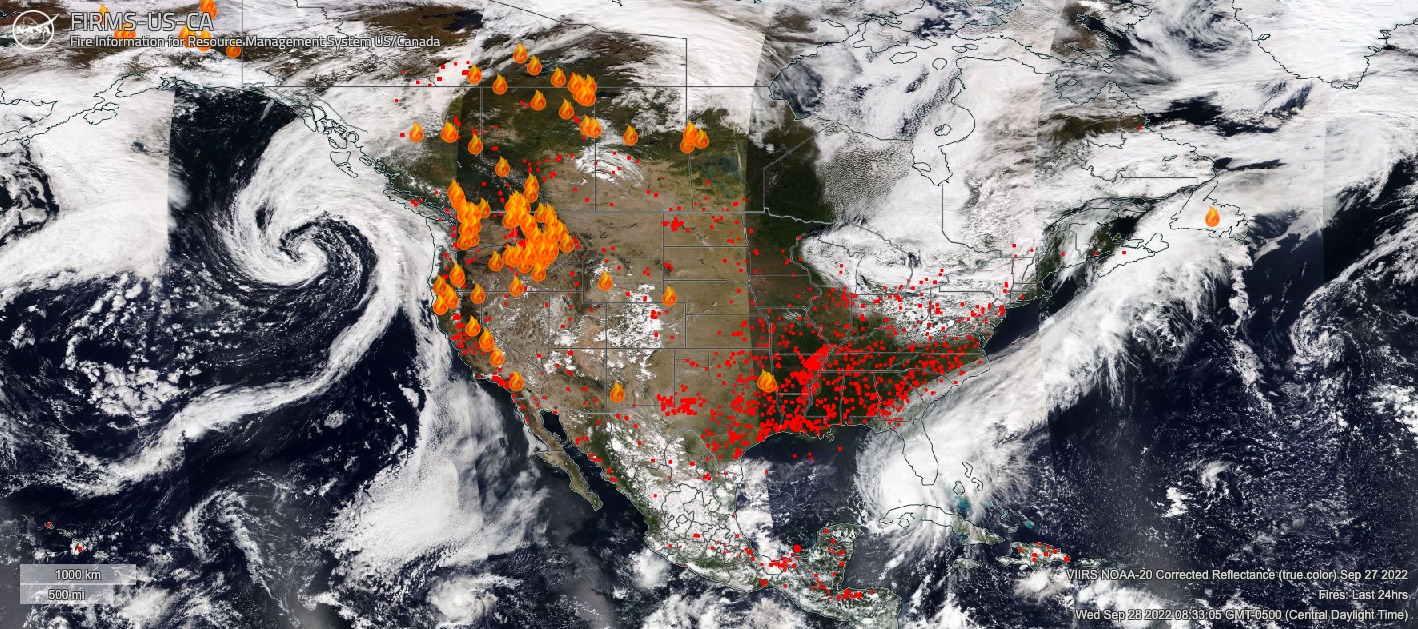
The University of Wisconsin–Madison Space Science and Engineering Center is providing fast turn-around satellite data to NASA as part of a push for timelier tracking and monitoring of wildfires. The “low-latency data” is sent within a minute of observation.
A specialized satellite ground station on the UW–Madison campus receives data, and SSEC Distinguished Scientist Liam Gumley is leading the program.
“We’ve refined our ability to obtain data directly from the satellite and receive it on the ground, a process known as direct broadcast,” says Gumley. “Now, from Earth observation to wildfire detection is less than 60 seconds.”
Four other ground stations across the U.S. also receive satellite data for wildfire monitoring. These low-latency data – information processed quickly to speed decision making – from U.S. Earth observation satellites are a new addition to the NASA Fire Information for Resource Management System (FIRMS).
NASA developed FIRMS to provide satellite-based detections of active fires in the U.S. and Canada. Once a fire is detected, NASA can coordinate with decision makers at other agencies to respond to and continuously monitor the fire and inform the public.
An expert in satellite data, including algorithm development and real-time data receiving and processing, Gumley has been on the leading edge of efforts to get satellite-derived information to those who need it sooner.
Read more about fire detection on NASA’s website.