From Crandon to Allouez, a UW education within reach
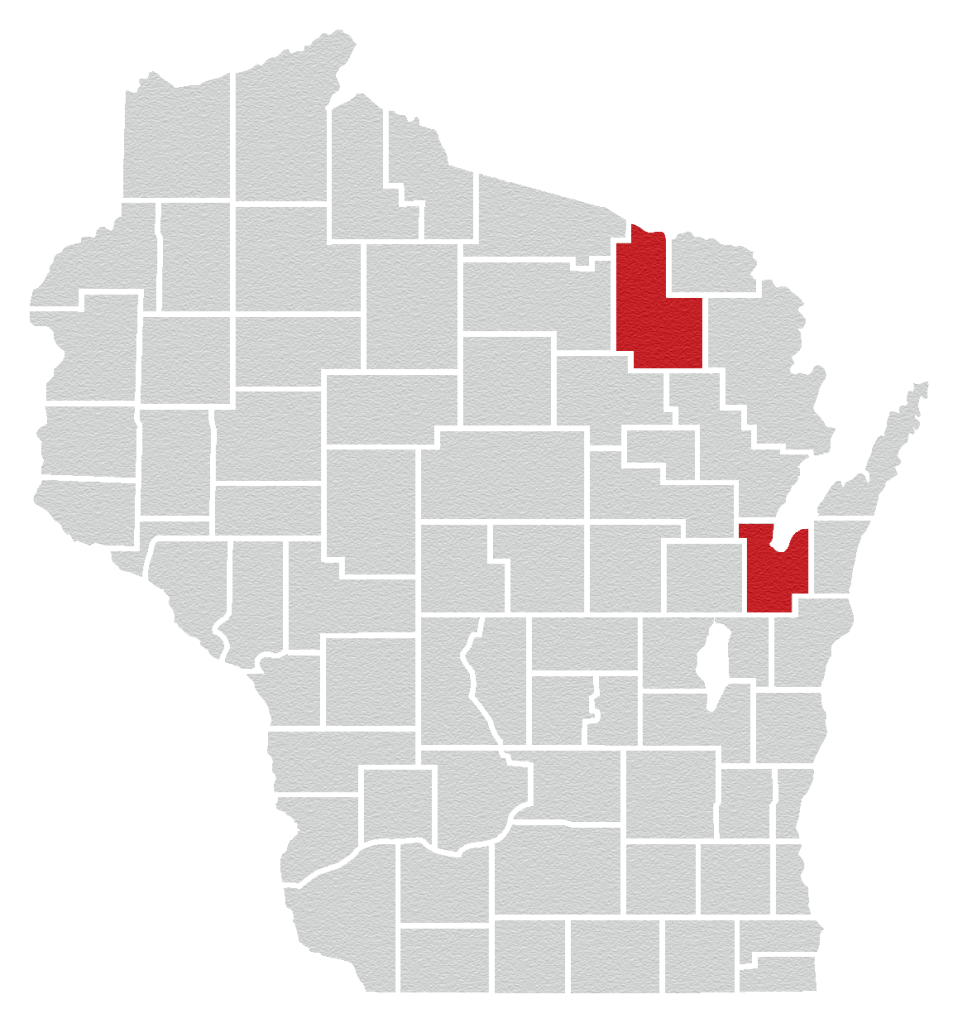
In Crandon, Wisconsin, Maya Quade watched her mother work three jobs while studying to become a nurse. In Allouez, Frida Galt hoped to become the first in their family to earn a four-year college degree.
Both students arrived at UW–Madison with different goals, but something important in common: tuition support through programs designed to make college more affordable for Wisconsin students and families. For Quade, that’s the Wisconsin Tribal Educational Promise Program. For Galt, it’s Bucky’s Tuition Promise.
The two are among the 3,920 Wisconsin first-year students starting at UW–Madison this fall – the most in the university’s history. We asked them to share their stories and tell us who helped them get here.
“I’ve always believed in my mom, and she always believed in me.”
When Maya Quade was in high school in Crandon, Wisconsin, she was offered the chance to go to a pharmacy summer camp at UW–Madison. The experience would end up shaping her future. “It was wonderful. Ever since then, I have dreamed of coming here and becoming a pharmacist.” And she put her dreams into action, getting her associate’s degree before even leaving high school.
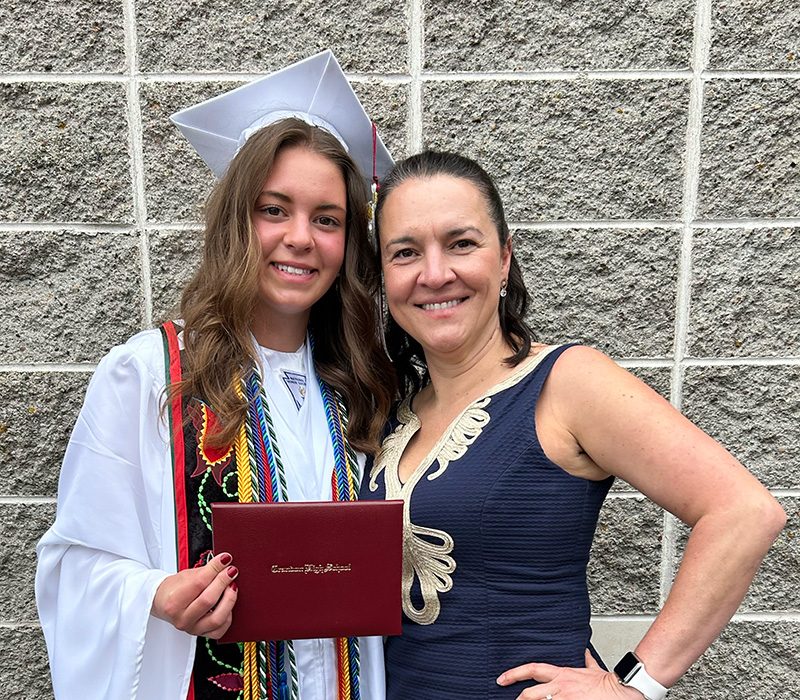
Quade is an enrolled member of the Sokaogon Chippewa Community and is a Wisconsin Tribal Educational Promise Program recipient. The program is now in its third year with 109 undergraduate recipients, 39 from this incoming class. Having her tuition covered creates a feeling of relief for her. It will allow her to join the Wisconsin Track Club and be “as active as possible” at St. Paul’s Catholic Student Center on campus. And it will give Quade the freedom to, as she put it, “really push myself. I am looking forward to my education at Madison being hard.”
Quade credits her mom for giving her that work ethic. “My mom worked three jobs and was going to a community college to become a nurse. She worked really hard.”
During the COVID-19 pandemic, her mother was a traveling nurse and her stories of helping others during the pandemic left an impression on Quade.
“She was helping in our clinics and our hospitals. It was inspiring.” But it was also difficult for Quade, who, as the oldest child in her family, was left to take care of her two younger siblings. “I practically raised my brothers during the years of COVID. It will be a really big step for our family with me not being there. It’s going to be really hard on them.”
But her mother pushed her to get a medical education at UW–Madison.
“She knew I could do it,” Quade says. “I’ve always believed in my mom, and she always believed in me.”
This year, 1,305 UW–Madison students benefit from Bucky’s Tuition Promise, which covers four years of tuition and fees for Wisconsin freshmen from families earning $65,000 or less annually.
“I’m going to need to find friends here with cats.”
When Allouez, Wisconsin, native Frida Galt was asked what they plan to study at UW–Madison, their response wasn’t what one might expect. “I’m an artist, but I don’t want to pursue art as a career. I want to incorporate art into science!”
Over the past few months, Galt, who plans to become a geologist, has made a clay trilobite wall sconce, a fabric anatomical heart, a jumping spider made of bits of plastic and — their most proud achievement — a wooden camera obscura based on drawings in a history book.
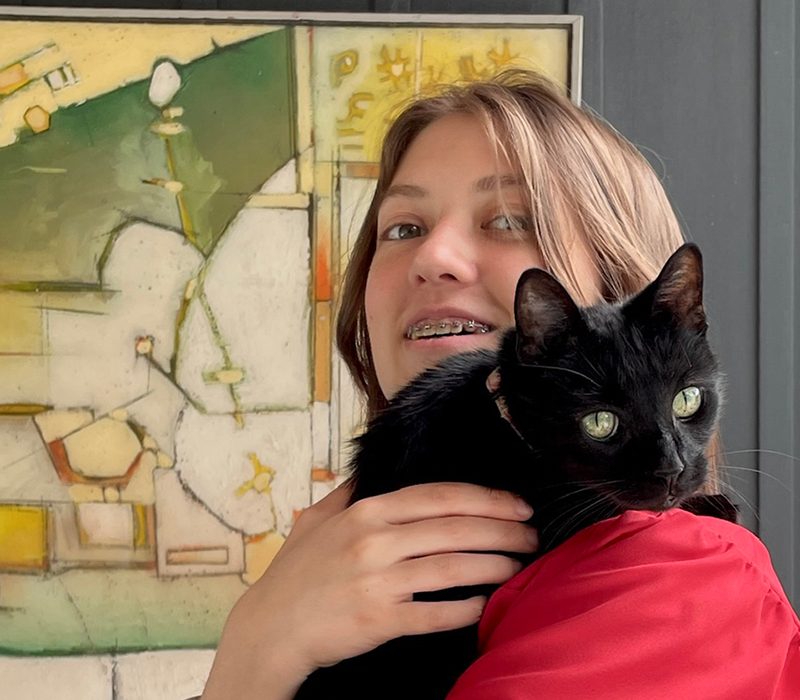
Galt joins 1,034 others in their incoming class as a Bucky’s Tuition Promise recipient, which guarantees four years of tuition and segregated fees for any incoming new freshman from Wisconsin whose family’s annual household adjusted gross income is $65,000 or less. For Galt, this promise is tied to being a Wisconsinite. “I love Wisconsin I want to stay here and get involved to better this community I am a part of.”
Galt is also very proud to be one of 1,608 first-generation students this fall.
Like their art, Galt’s response to the question, “Who got you here?” was also not expected. “Babushka, my cat,” they say. “He’s the one who got me here.”
When Galt was in middle school during the pandemic, they struggled with their mental health. “Babushka was a consistent supportive presence,” from long walks together in the backyard to his napping on Galt’s lap while working on homework.
“Of course, I’ll miss my family and friends, but pets are different in that you can’t exactly call a cat and talk to them whenever you miss them,” Galt adds, noting that Babushka is staying at home. “I guess I’m going to need to find friends here with cats that I can visit so I don’t get too sad.”
Read more about members of Wisconsin’s incoming class, and the people who helped them get here.